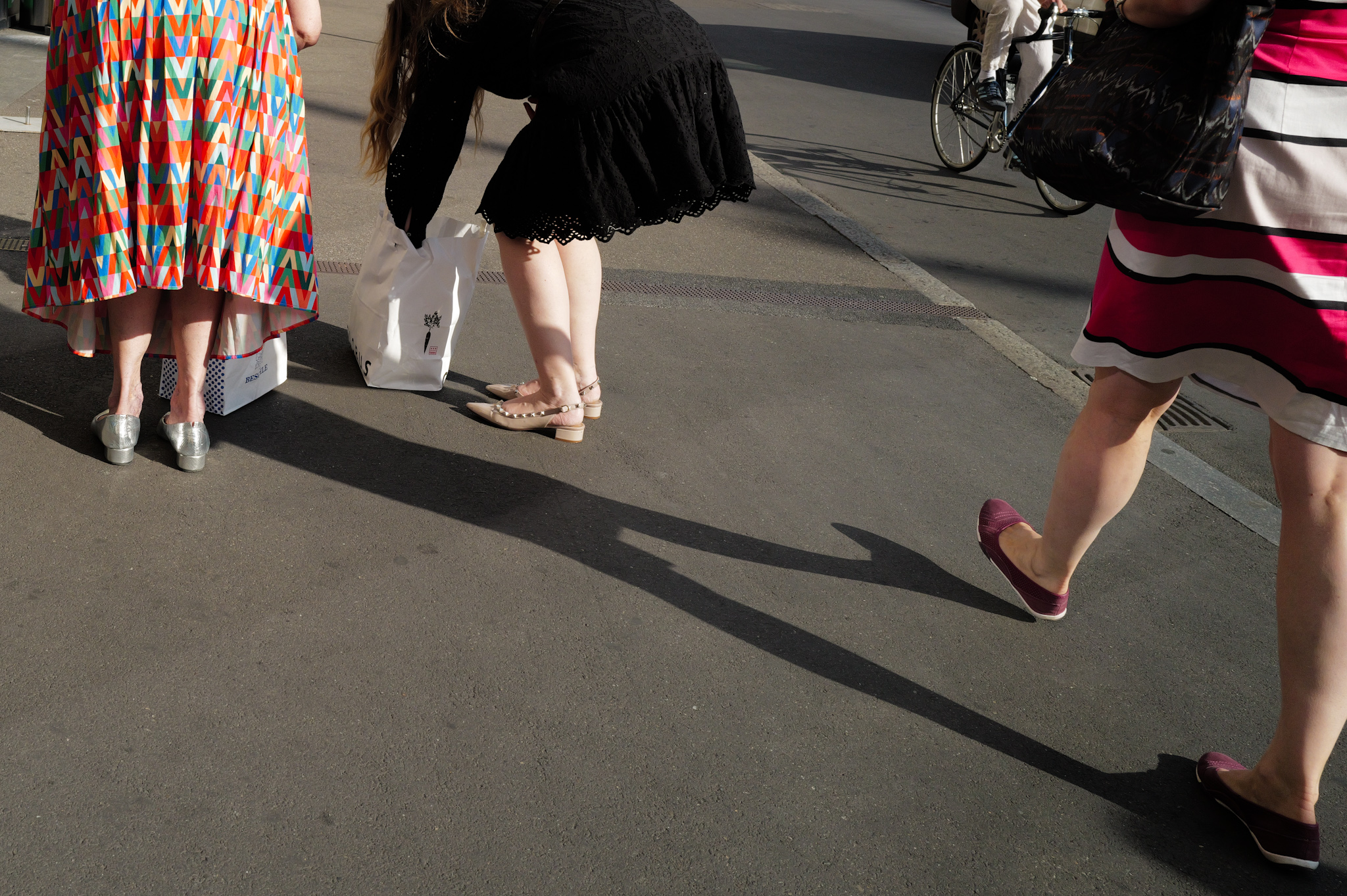
Street Photography in Basel: A Photographer’s City on the Border
Basel is a quiet city. That’s the first thing people notice while doing street photography in Basel, and the first thing they get wrong. It looks orderly, prosperous, a little reserved, Swiss in all the expected ways. But street photography is the art of paying attention until the surface gives way, and Basel rewards that kind of attention more than almost anywhere I’ve worked. The quiet is not emptiness. It’s a held breath.
I’ve only lived here a few months, which means I’m still seeing it the way a stranger does, and that turns out to be the best possible condition for this kind of work. Long enough to know where to stand, new enough that nothing has gone invisible yet. I’ll say it plainly: Basel is one of the best places I’ve ever worked as a street photographer. Most people wouldn’t guess that. I want to tell you why.
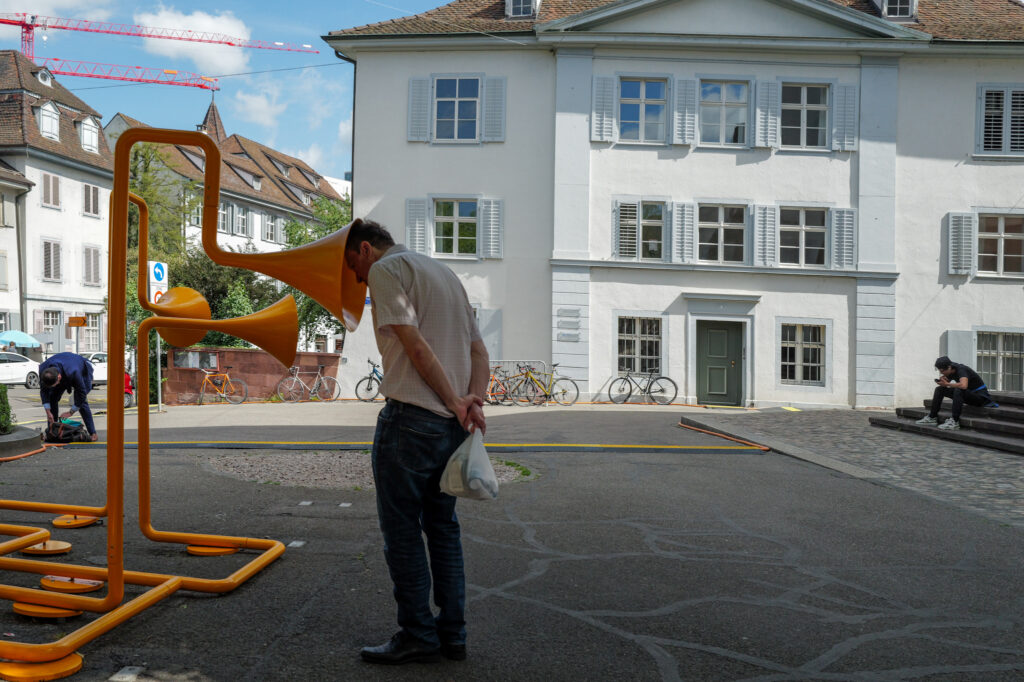
What makes street photography in Basel so particular, for anyone who walks it with a camera, is that it sits on a seam. Basel is the last Swiss city on the Rhine before the river slips out of the country and becomes the border between France and Germany. You can stand on a riverbank here and look at three countries. That fact does something to a place. It makes it a city of passage, of edges, of people arriving and leaving, and a photographer lives on edges. This is where I do most of my work, and these are the places I keep coming back to.
Marktplatz: the city performing itself
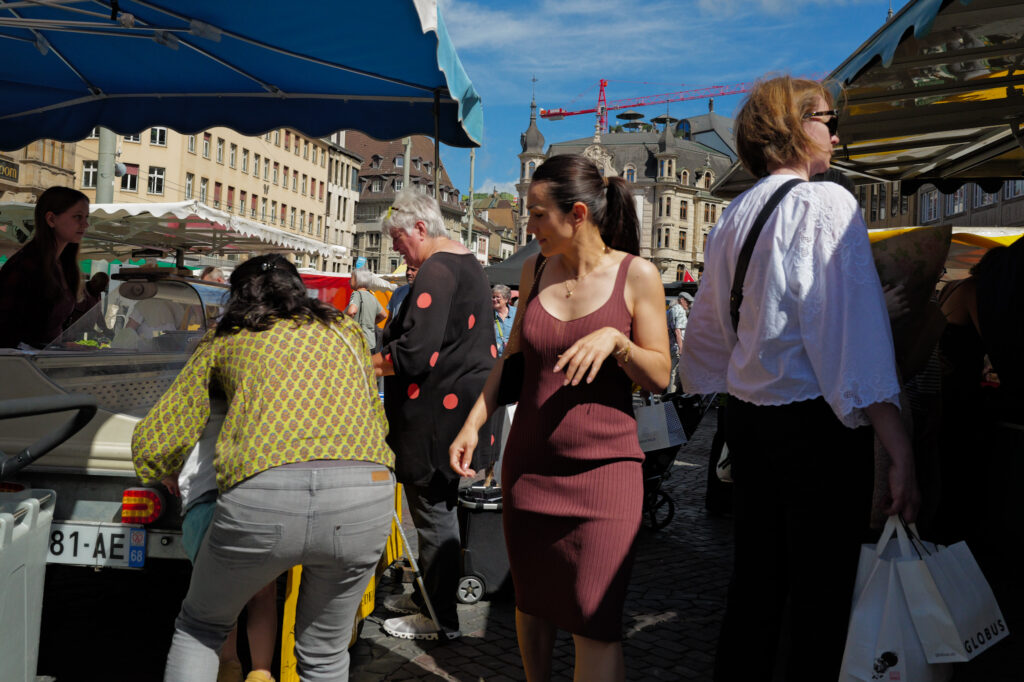
Start at Marktplatz, in front of the red sandstone Rathaus. In the morning the square fills with market stalls: produce, flowers, food stands sending up steam, and the awnings turn the light into something soft and tented. It’s the most photographed spot in Basel, which is exactly why it’s a trap and a gift at the same time.
The trap is the postcard: the pretty Rathaus, the colorful stalls, the picture anyone with a phone takes and forgets. The gift is everything happening in front of it. A vendor’s hands. The face of someone deciding between two things. The small theater of ordinary commerce, played out against a backdrop that’s been hosting it for five hundred years. Don’t shoot the square. Shoot the life moving through it, and let the square be the stage. The awnings are your friend, they cut the harsh overhead sun and wrap people in even, generous light.
The Rhine: where Basel comes alive
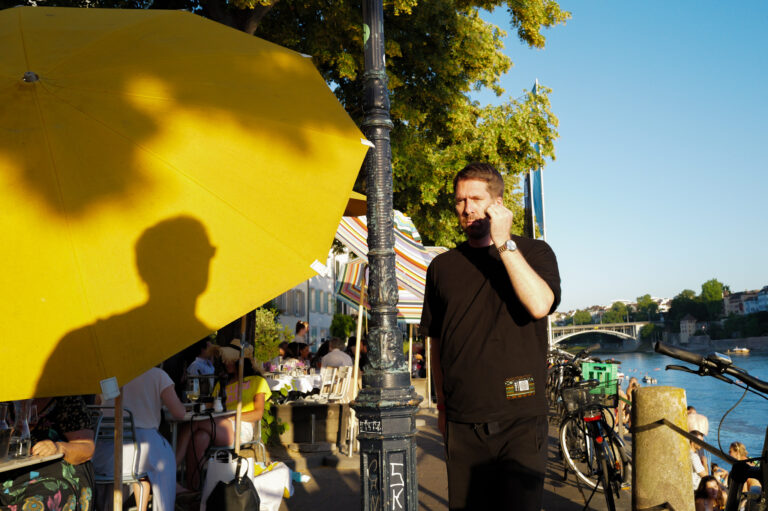
If Marktplatz is the city’s face, the Rhine is its pulse, and in summer, its whole reason for being. The long riverbank promenade is where Basel stops being reserved. People sit along the water for dinner and aperitivo, the buvettes pour drinks, and the banks fill until evening with a density of life you wouldn’t believe from the city’s daytime calm.
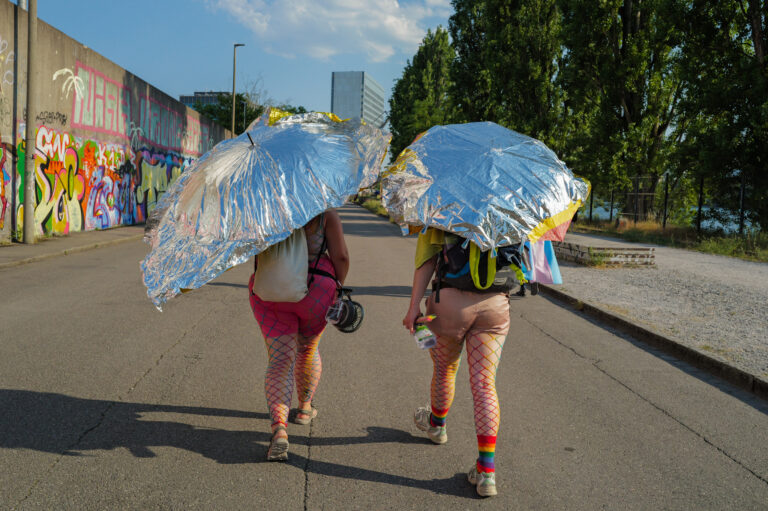
And then there are the swimmers. On hot days people climb into the Rhine upstream, seal their clothes into a brightly colored Wickelfisch, a waterproof swim bag invented here, and let the current carry them down through the heart of the city. Heads bobbing in the green water, dry bags trailing behind them like buoys. It is one of the strangest and most wonderful things you can photograph in any European city: an entire population that commutes, unwinds, and cools off by floating through downtown. The contrast alone, business district above, drifting bathers below, is a whole essay in a single frame.
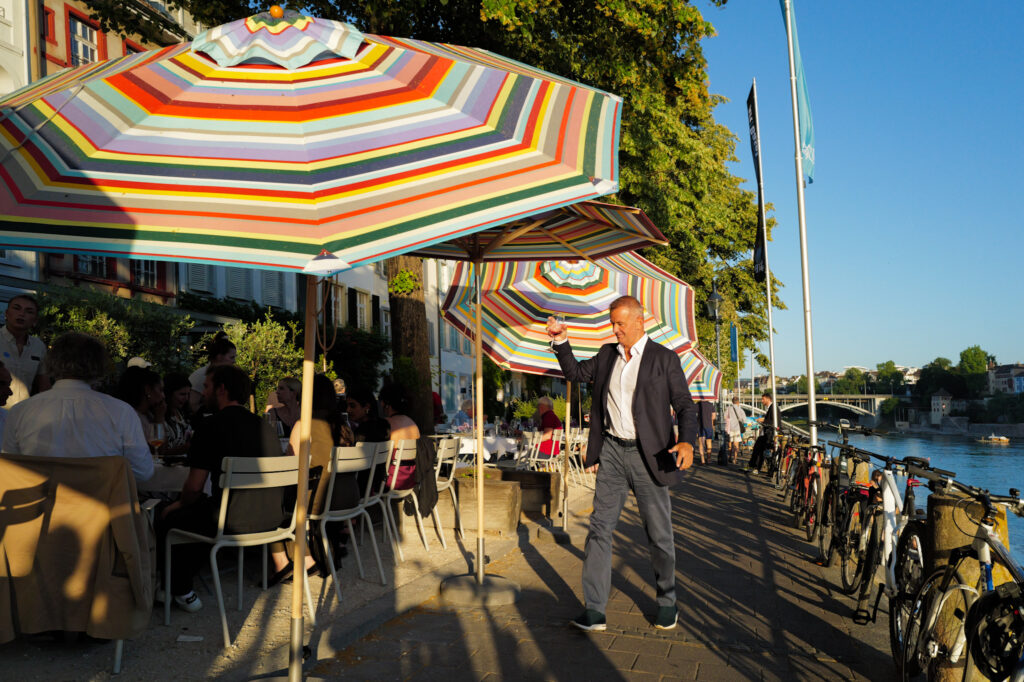
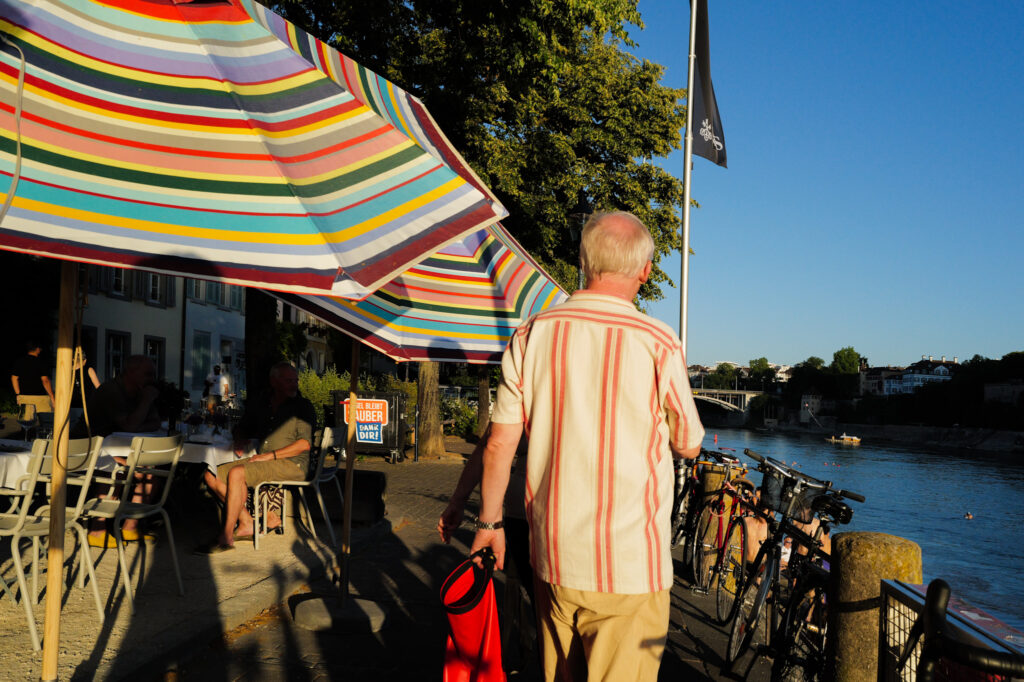
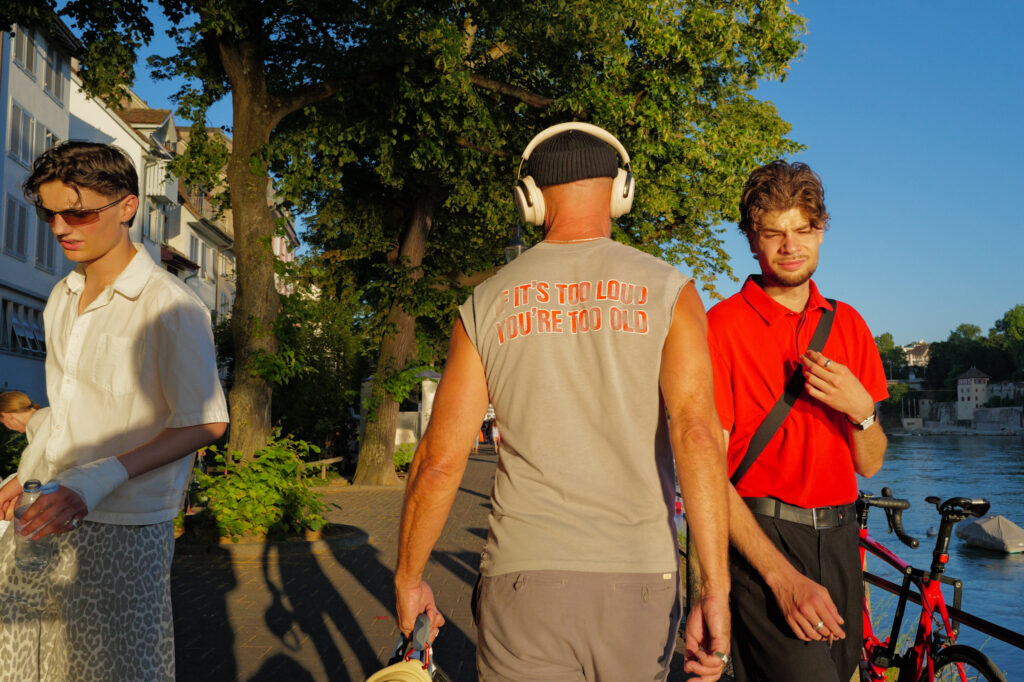
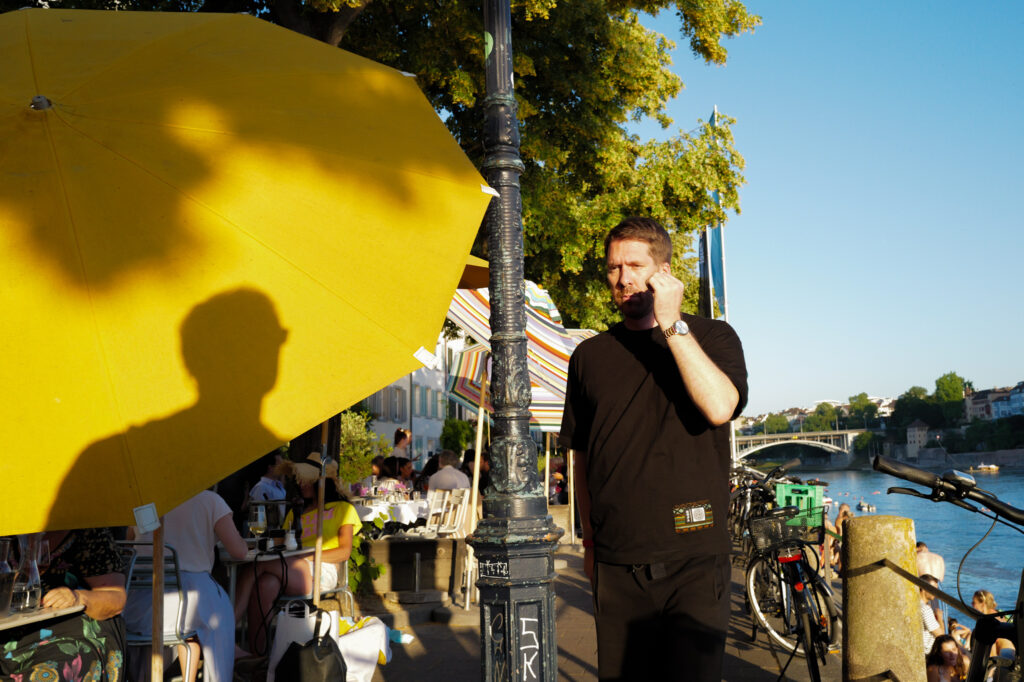
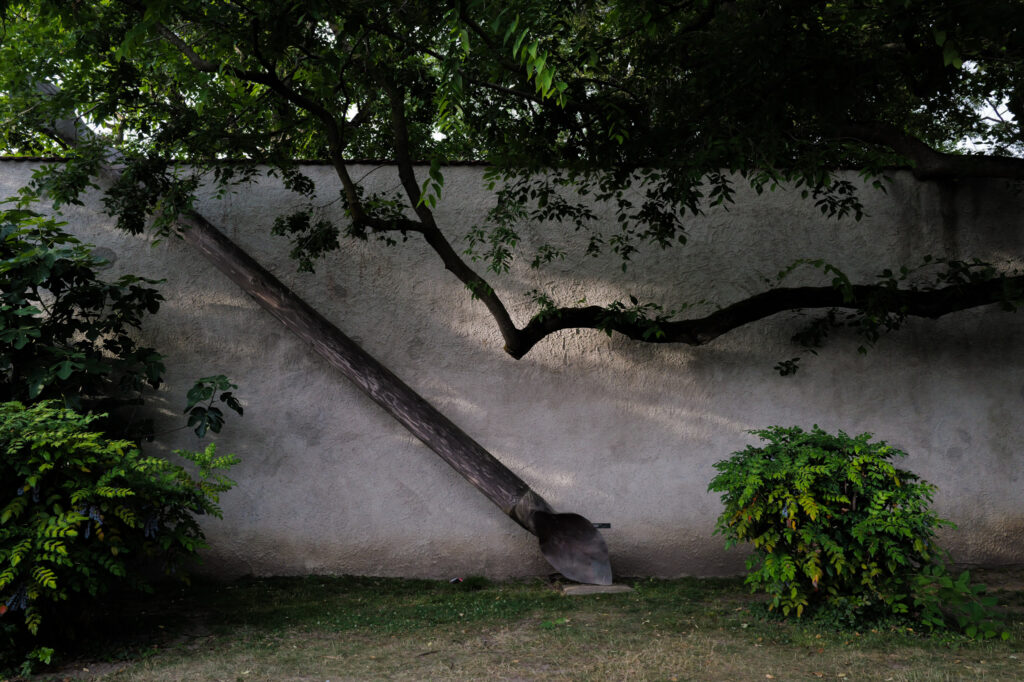
But the time to be here is blue hour. As the sun drops, the light along the Rhine becomes something I don’t have words for and won’t try to oversell. The shadows stretch out long across the promenade, the water holds the last of the color, and for twenty minutes everyone walking the bank is rimmed in gold and trailing a shadow twice their height. This is when the river gives you pictures. Wait for it. Walk all day if you have to, but be on the Rhine when the light goes.
One more thing to watch for: the ferries. Four small boats with no engines cross the river pulled only by the current, the way they have for a hundred and fifty years. A slow, silent subject in a fast world, worth a frame whenever one drifts across yours.
Kleinbasel: the other side
Cross to the far bank, Kleinbasel, “Little Basel”, and the register changes. This is the side locals will tell you has a different character: less polished than the Grossbasel postcard, more mixed, more lived-in. The streets don’t agree with one another; one is quiet and residential, the next is full of bars and gathering places, voices spilling out onto the pavement.
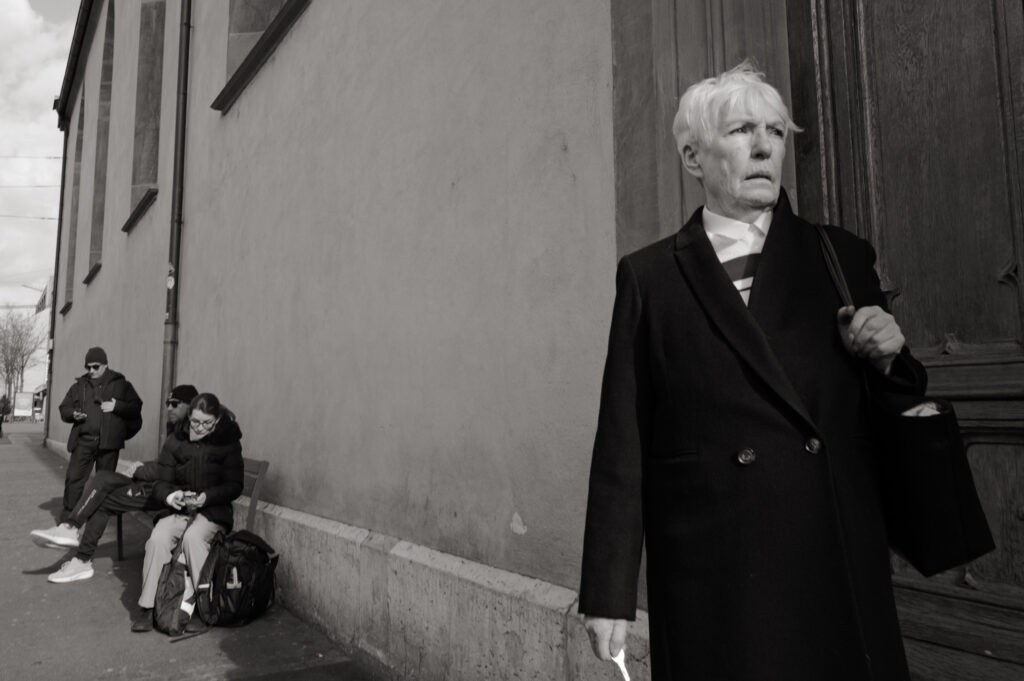
For a street photographer this disagreement is the point. Kleinbasel is where Basel’s surface is thinnest, where the city is most willing to show you something unguarded. It’s where I go when Grossbasel feels too composed. The light is less spectacular than the Rhine at dusk, but the human material is richer, and the frames feel more honest.
Saturdays at Petersplatz
I didn’t find these places alone. When I arrived I knew no one, and one of the first people I met was Oliver, another street photographer, and the kind of person who makes a new city feel smaller in the best way. He’s the one who walked me into Basel, showed me where to look, got me moving through it. We’ve fallen into a Saturday ritual: shooting the streets together, then lunch somewhere in the city, talking the whole time about the photographers we love. For him it’s Saul Leiter above all others, and honestly you can tell, Oliver is all warmth and color and good humor, a big extroverted voice that fills a room, and his pictures are exactly like that: playful, generous, alive. Some people photograph the way they are. He’s one of them.
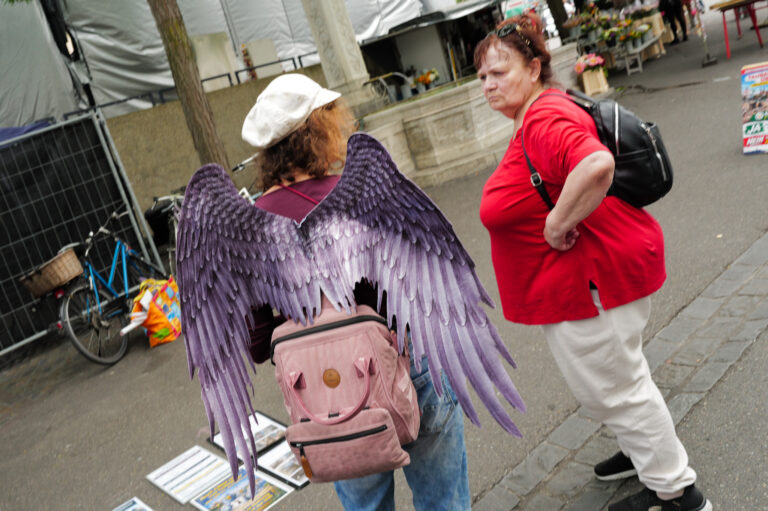
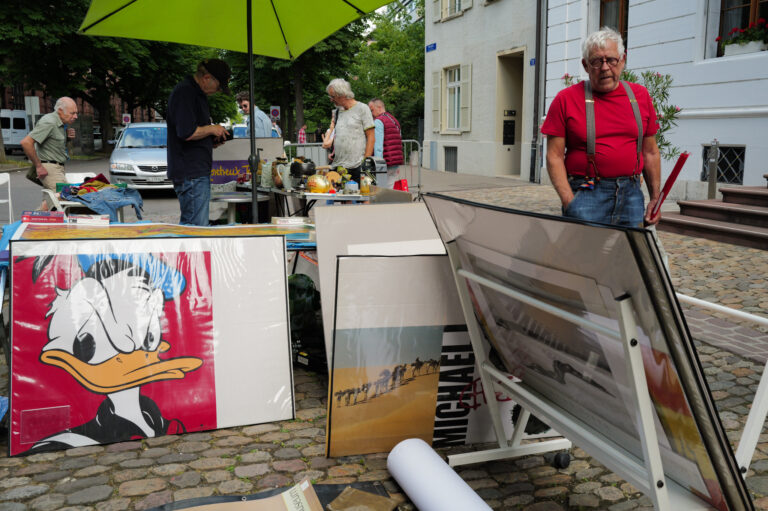
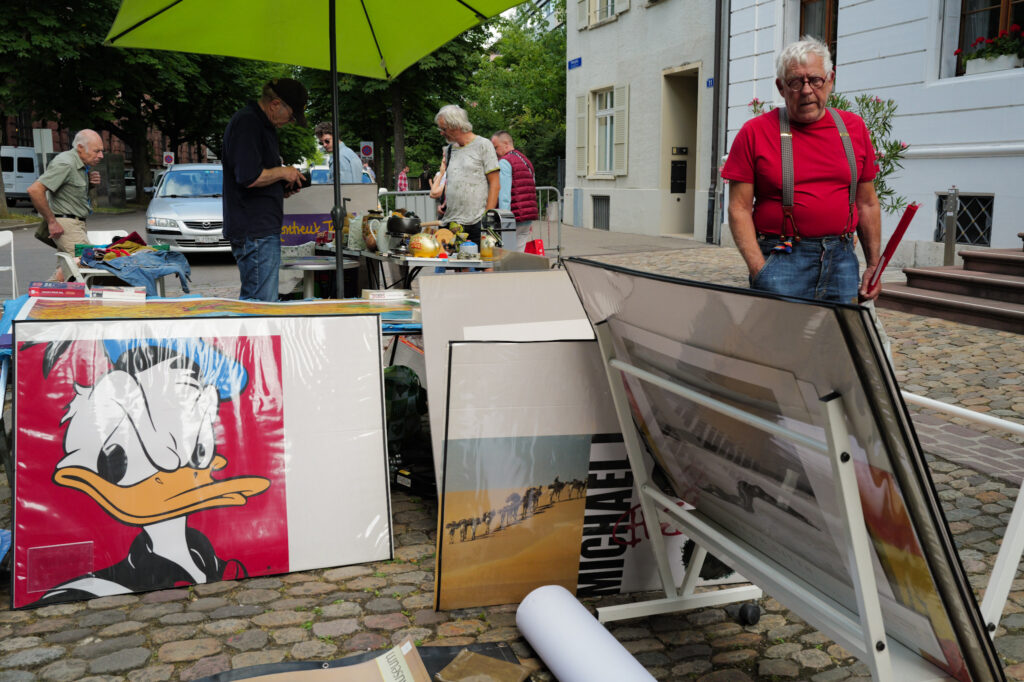
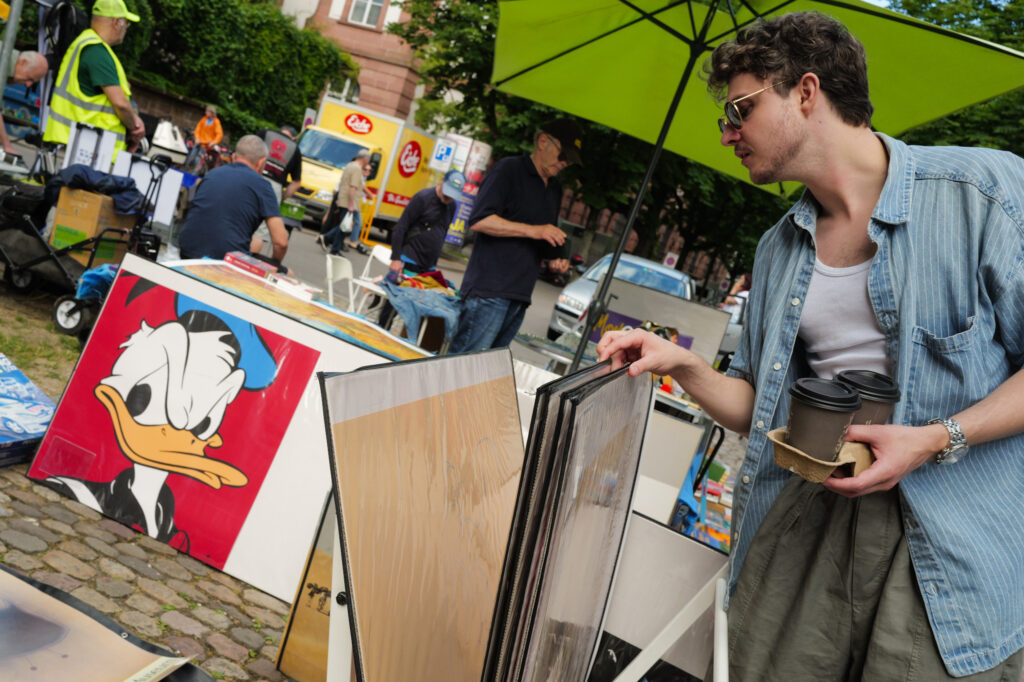
It was Oliver who first took me to the flea market on Petersplatz. Every Saturday morning the square fills with stalls: fine antiques, old silverware, vintage clothes, crates of postcards, and, if you’re lucky, a table of battered old cameras that someone loved once. It’s a locals’ market more than a tourists’ one, which is exactly what makes it good. The pictures here aren’t in the objects; they’re in the hands turning them over, the faces deciding, the small negotiations, the vendor watching you watch his table. Get there early, when the light is still low and slanting between the stalls, and work slowly. A flea market is a street photographer’s gift: people absorbed in looking, which means they’ve forgotten about you.
What you’re really photographing here
You don’t need much. Not a special camera, not the right lens, not perfect conditions: Basel asks for none of that. What it asks for is patience and a willingness to keep looking after everyone else has decided there’s nothing to see.
Because that’s the real subject here. Not the Rathaus or the river or the bridges, but the thing underneath the order: a border city, holding still on the outside, alive and crossing and drifting on the inside. There’s a saying in Basel that only those who have gone into the Rhine truly understand the soul of the city. I’d say the same about the camera. Only those who keep walking, past the postcard, into the ordinary, find out what Basel actually is.
It looks quiet. Go closer.