Street Photography Techniques: Fishing, Hunting, and Reacting
People talk about street photography techniques as if there were only one: walk around, find a moment, press the shutter. But after enough time on the street you start to notice that you’re not doing one thing at all. You’re doing three: Fishing, Hunting and Reacting. They feel completely different from the inside, they ask different things of you, and knowing which one you’re in changes how you work. I think of them as fishing, hunting, and reacting.
The difference between them comes down to a single question: what do you already have, and what are you waiting for? That question turns out to be everything.
Fishing: you have the scene, you wait for the subject
Fishing is the patient one. You find a place that already works: a background, a patch of light, a piece of the world arranged just so, and the only thing missing is a person. So you plant yourself, and you wait, and you let the picture come to you. You’ve cast the line. Now it’s up to the river.
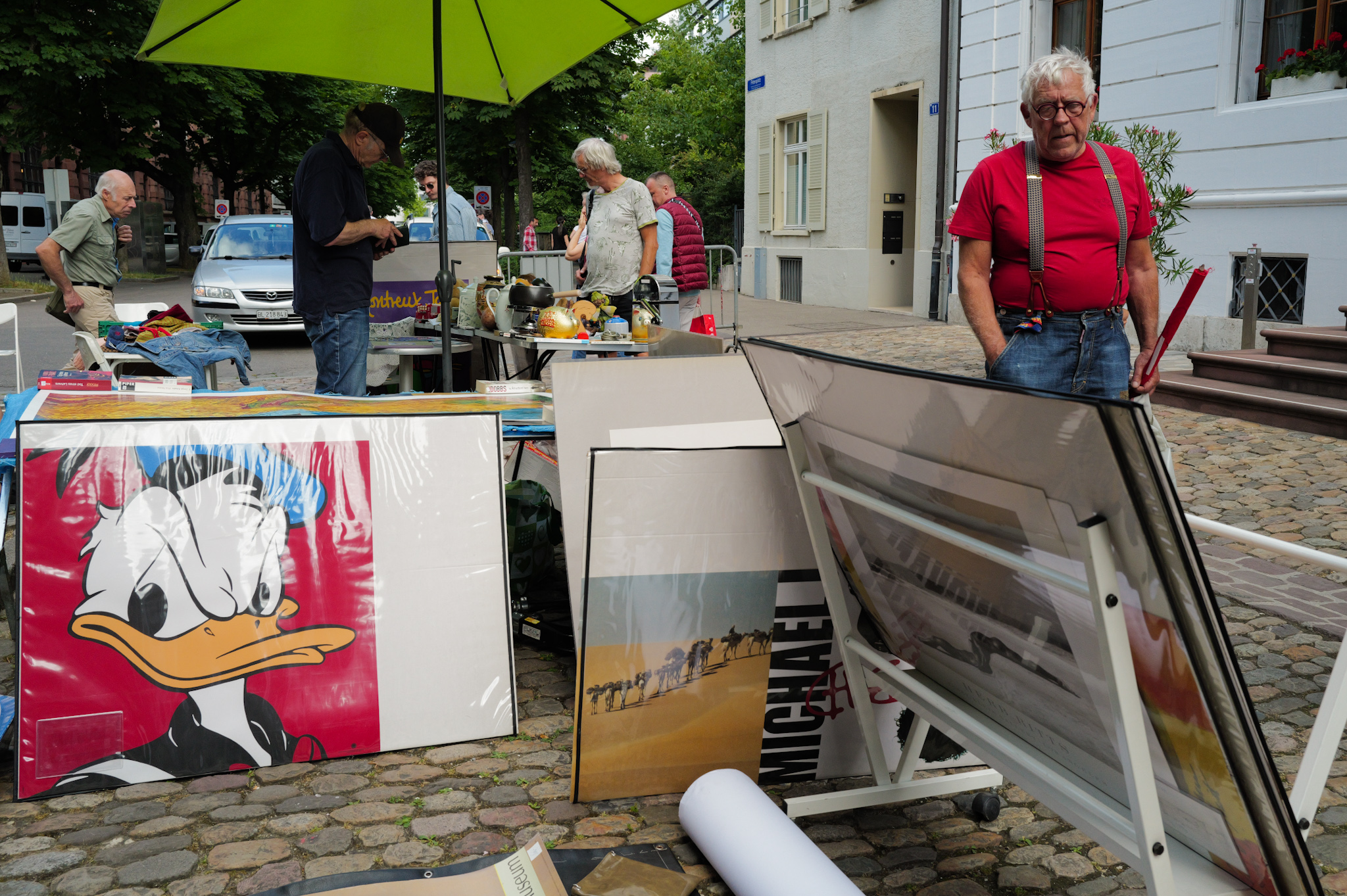
At the Petersplatz flea market one Saturday, I found a stall with a print of Donald Duck, the angry version, red background, that famous outraged face. The frame was good on its own, but it wasn’t a photograph yet. It needed someone. I had an idea of what I wanted: somebody in red, maybe, or somebody wearing a cartoon character, something to rhyme with the duck. So I waited. People drifted past, none of them right, and then the man in brown suspenders stepped into the edge of the frame, red shirt answering the red print, and an expression on his face not so far from Donald’s own. The river had delivered exactly the fish I’d hoped for. You don’t always get the one you pictured. But if the scene is good enough, waiting pays.
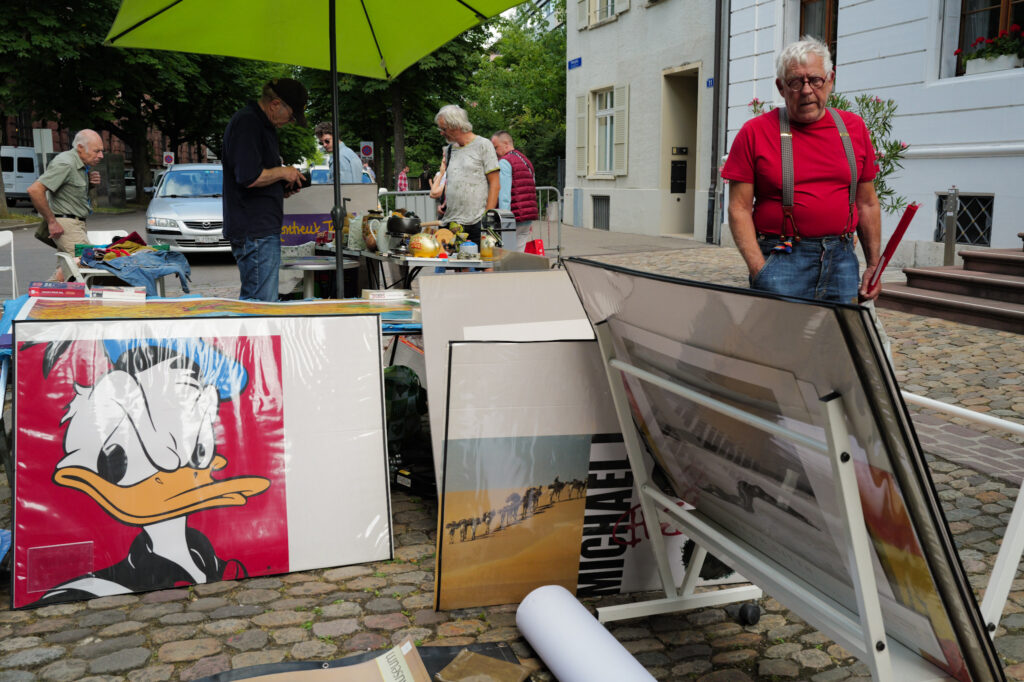
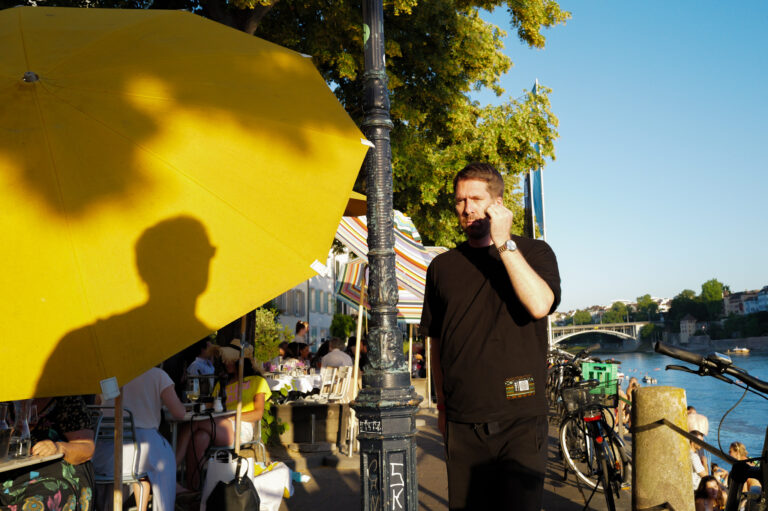
Fishing isn’t only about waiting for the “right” person, though. Sometimes the bait is light itself. Another day I found a wall, a pale facade studded with little black triangles, a yellow postbox, a Coop sign, and hard summer light raking across it. Beautiful empty stage. All it needed was a figure to fall into shadow against it. I waited, and a young man walked through, thrown into perfect silhouette, his hand raised to his face. The scene was already lit. I just needed someone to step into the trap.
Hunting: you have the subject, you chase the element
Hunting is the opposite motion. Here you already have your subject: a person who catches your eye, a character too good to let go, but on their own they’re not enough. What’s missing is the second thing: a background, another figure, an echo or a contrast that turns a person into a picture. So you don’t wait. You follow. You stalk your subject through the street, hoping the world will hand you the other half.
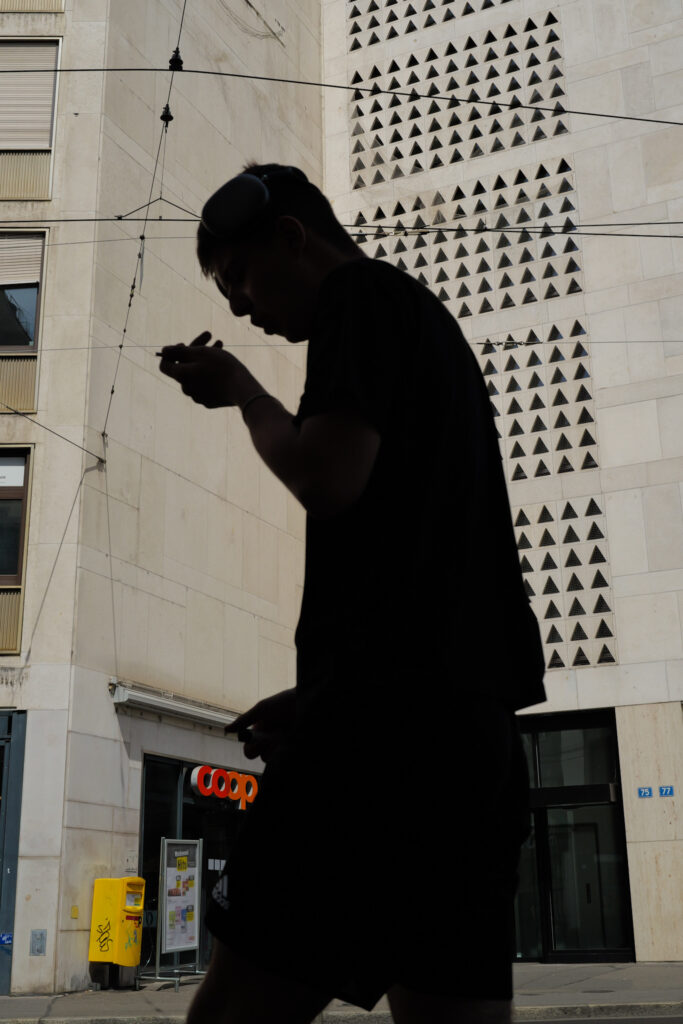
At Art Basel I noticed a young man walking with his phone strapped to his arm. The phone was off, as far as I could tell, and yet it still seemed to hold his attention, as if even dark it had a gravity. We live connected around the clock now, and there was something about him that said exactly that. He was my subject. But a man walking alone isn’t a photograph, so I followed him, watching for whatever might complete the thought. And then it appeared: a young man sitting on the rim of a fountain, folded over his own screen, completely absorbed. Two people who never see each other, sealed in the same bubble, joined by an identical gesture. The hunt had found its second half.
Reacting: you have everything, you only have a second
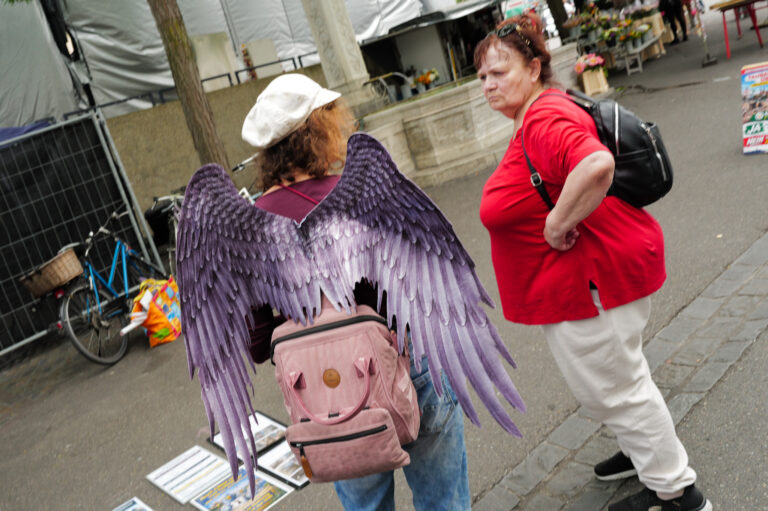
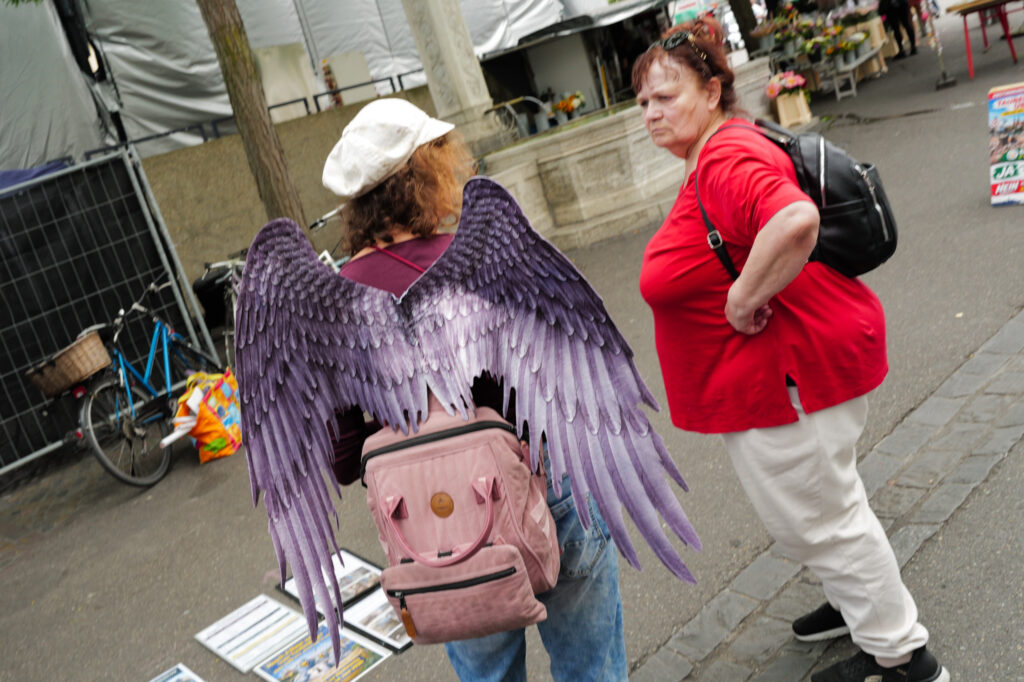
And then there’s the third one, which is nothing like the other two, because it gives you no time at all. Reacting is when the scene is already complete the instant you see it. Nothing to wait for, nothing to chase. The whole picture exists for a second or two, and the only variable is you: how fast you raise the camera, whether you’re paying attention, whether you’re ready. I wrote about this at length in the story behind Fallen Angel: the angel with purple wings who gave me exactly one second to believe her. That’s pure reaction.
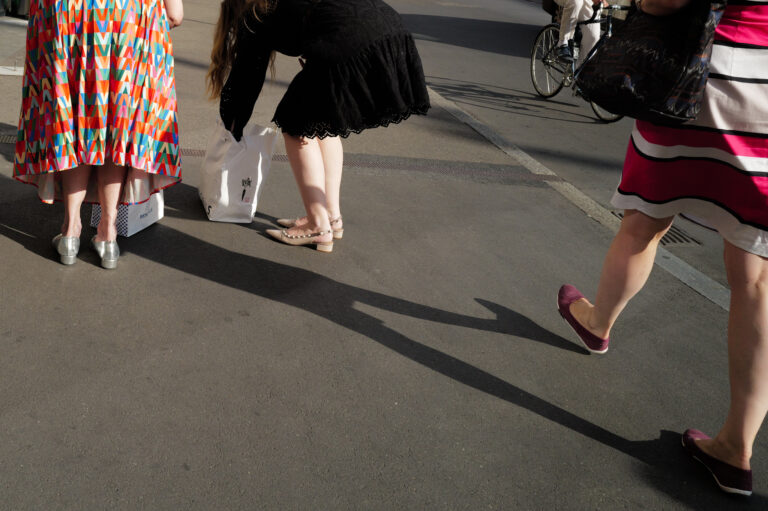
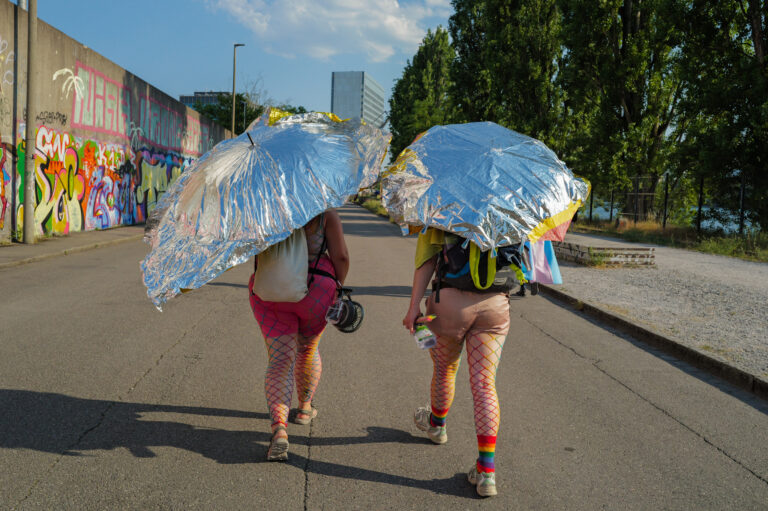
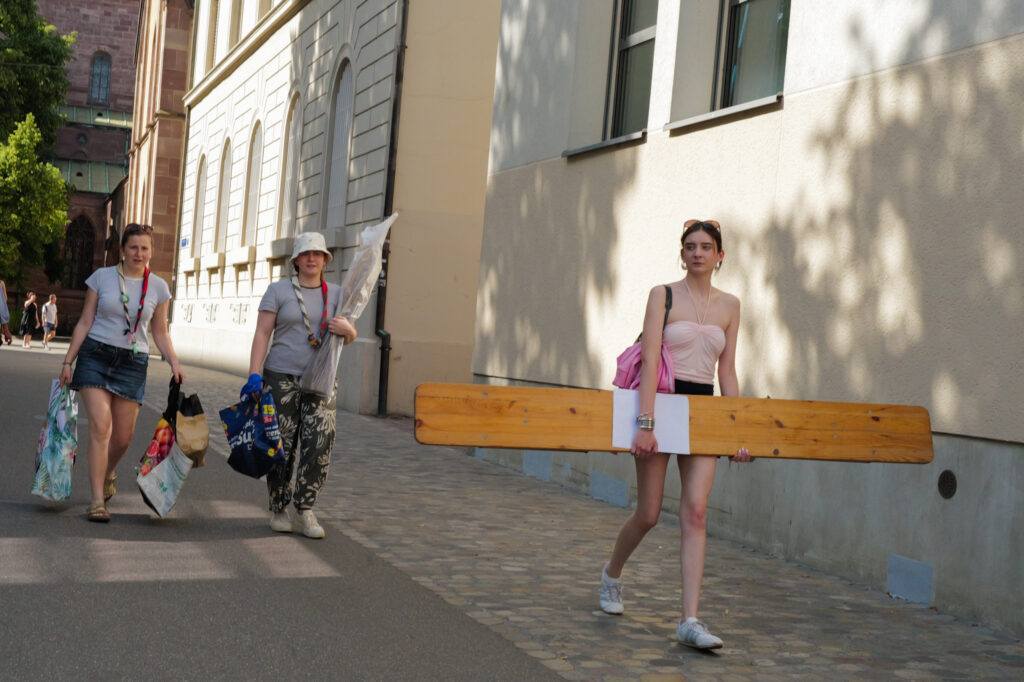
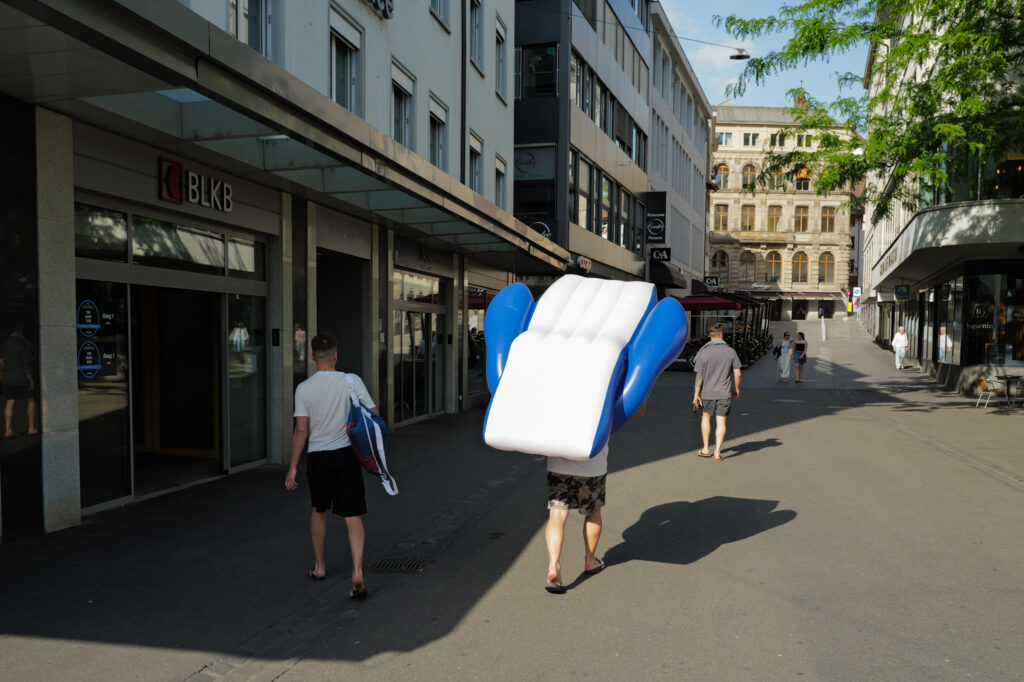
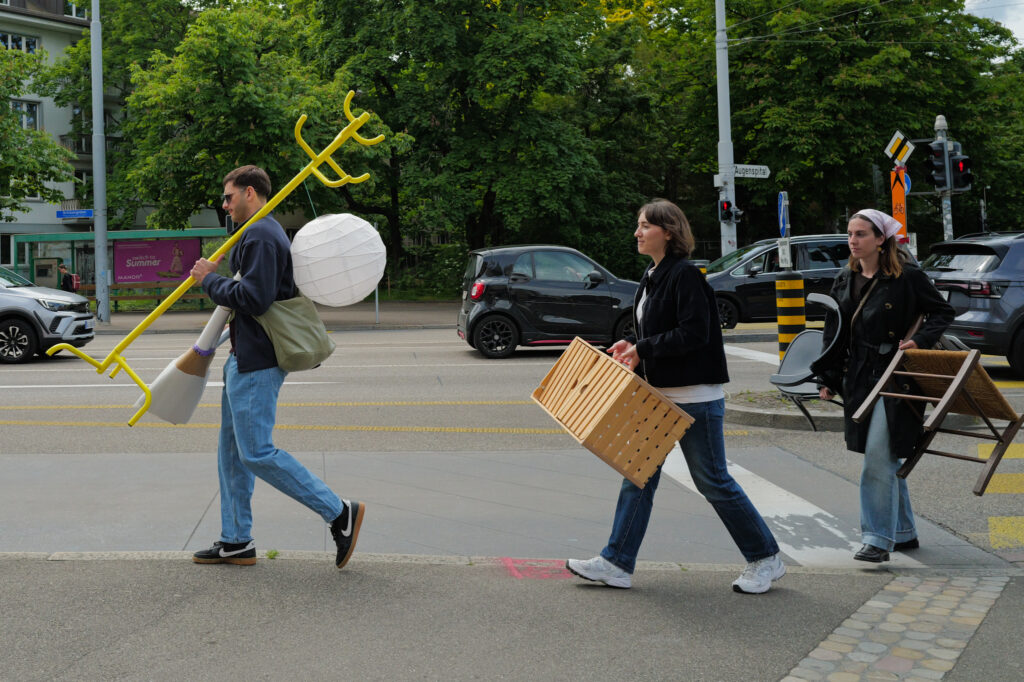
It happens to me most often with people carrying things. I love to walk, precisely because people and life never stop surprising you: sometimes with the most unexpected gestures, and sometimes by hauling the strangest objects down an ordinary street. A young woman carrying a long wooden plank like she was crossing a stage. A guy shouldering a blue-and-white inflatable mattress through the pedestrian zone in flip-flops. Three friends at a crosswalk, one with a yellow trident and a paper lantern, the next with a wooden crate, the last with a chair under her arm, a whole absurd procession waiting for the light to change. None of these can be fished for. None can be hunted. They assemble themselves in front of you, complete and impossible, and either you react or you lose them. You don’t get to choose which ones survive.
The thread that runs through all three
The longer I do this, the more I notice something the three modes have in common, something hiding underneath the method. In almost all of these pictures, the people are absorbed in something: a phone, an object in their arms, the goods on a table. They’ve forgotten about everything around them, including me. That’s what lets the photograph happen, in all three modes. Whether I’m waiting, chasing, or reacting, the gift is the same: someone too caught up in their own life to notice it’s becoming a picture.
So the three aren’t really three different skills. They’re three different relationships with time: patience, pursuit, and pure reflex, pointed at the same quiet miracle. Fishing, hunting, reacting. Most days on the street are one of the three. The trick is knowing which one you’re in.