What I Looked for at Basel Pride
I went to Basel Pride, Basel tickt bunt, meaning to avoid the postcard shots. I knew I’d take some anyway; they’re a way of standing close to a community whose rights matter to me. But the picture I was after was a different one: an isolated gesture, a moment of closeness outside the crowd. The heat helped. It was brutal that day, and somehow it made being there mean more.
The heat is the thing I keep coming back to. The papers right now are full of it: record summer, deaths from the heat, a continent warming past what it was built for. That day in Basel it was the air itself, thick and hard to move through. But this is a generous city. The public fountains had already done their work, and along the Rhine the people running the kiosks and bars, and a few private citizens, from their own gardens on the riverbank, were spraying the passers-by with cool jets of water, just out of kindness. You walked through the day getting soaked by strangers, and grateful for it.
To get the best photograph of the day I had to wait until the parade was over, which, honestly, I half expected. That’s the whole thing about street photography. You don’t give up. The march had reached the port, the end of its route, and I was heading home when the street did what it always does: it surprised me.
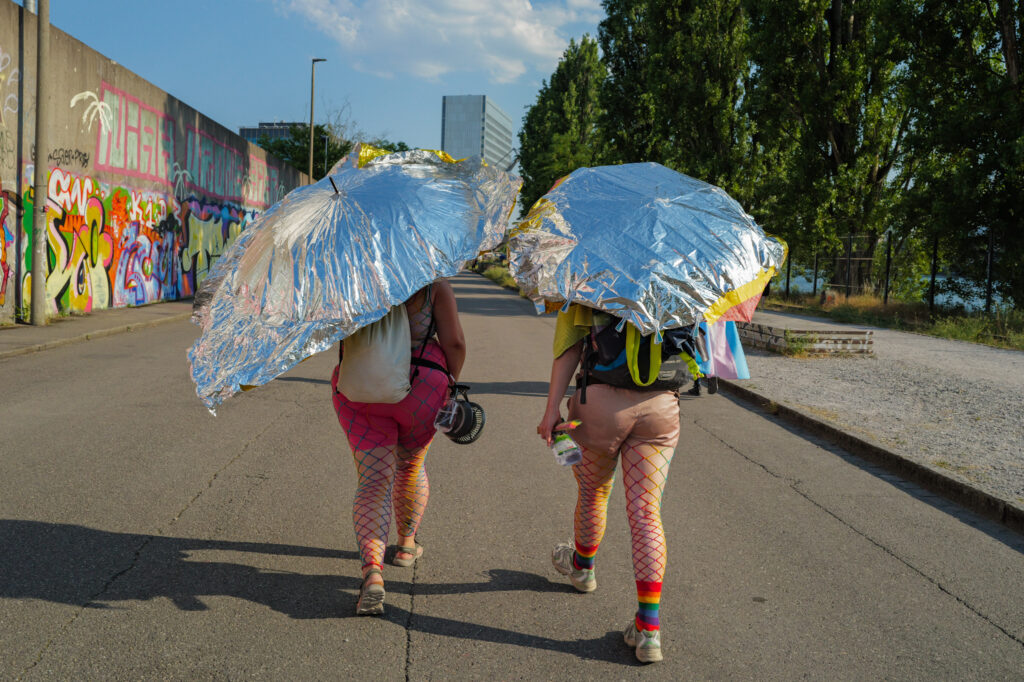
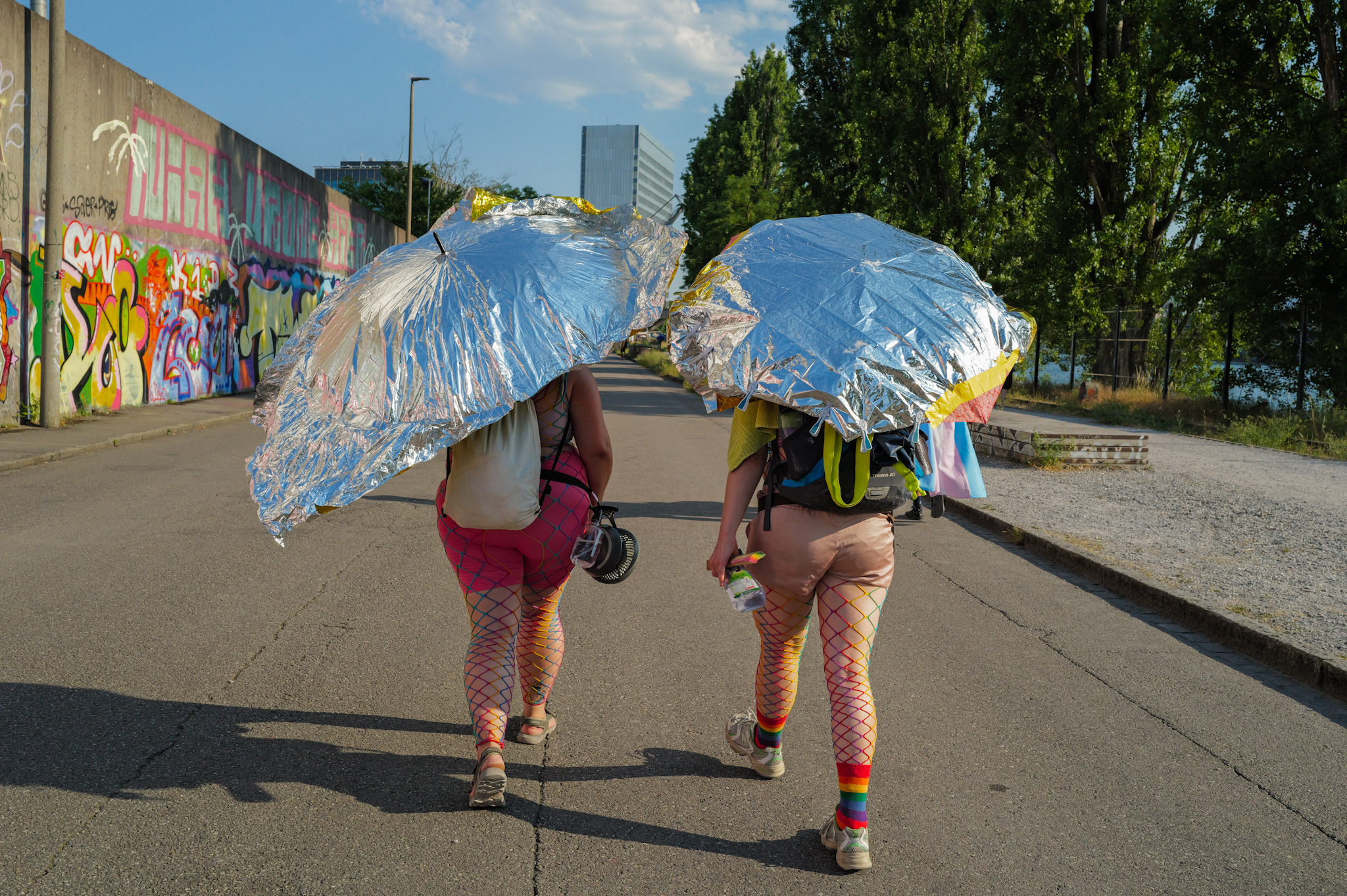
And there they were. Two figures walking away from me along the Rhine, back up the route the parade had just come down. They’d each opened a sun umbrella, and over the umbrellas they’d draped emergency thermal blankets, the silver kind, the ones meant for heat shock. Survivors of this European summer, defending themselves with the tools of an emergency. Going home, going for a drink, I couldn’t tell you. I just saw the silver, and I raised the camera.
I didn’t build that picture and I didn’t chase it. It was already complete the moment I saw it, all I had to do was react before it was gone. (I wrote about that mode of working here: the three ways a street photograph comes to you.) The Pride, in the end, gave me mostly that: not the things you plan for, but the things that ambush you on the way out.
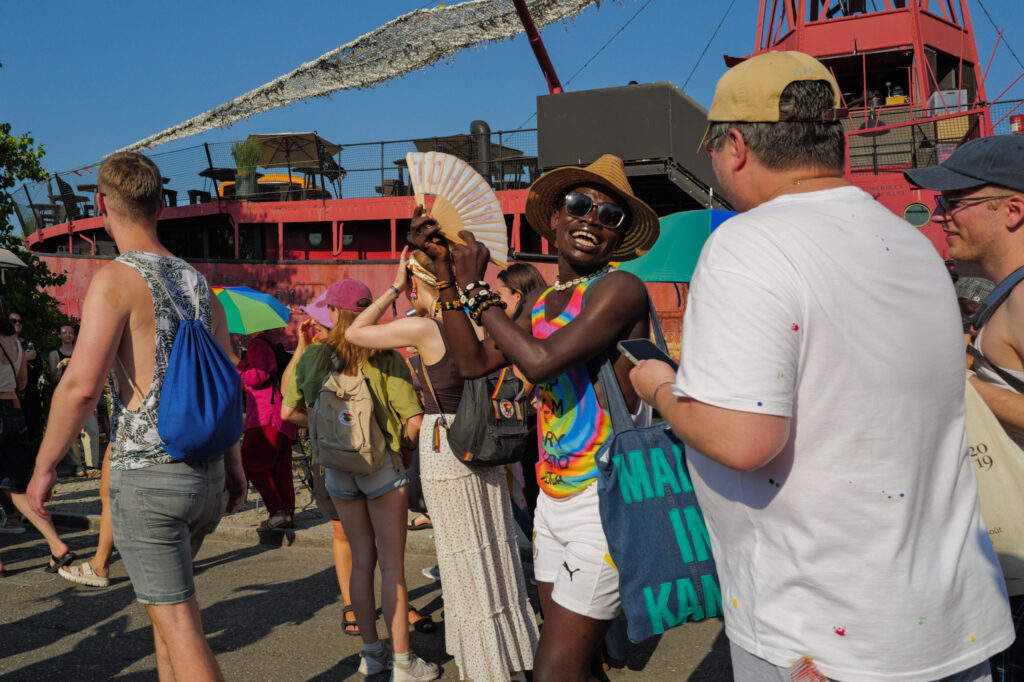
The same was true of the man with the fan. He’d raised a fan against the sun, that was the gesture that stopped me, a person shielding himself from the same heat that hangs over everything else here. What I didn’t see until I was home was the rest of it: the moustache, the sunglasses, the Hello Kitty shirt. The contrast was a gift I only unwrapped later. The street hands you these things and doesn’t tell you what’s in the box until afterward.
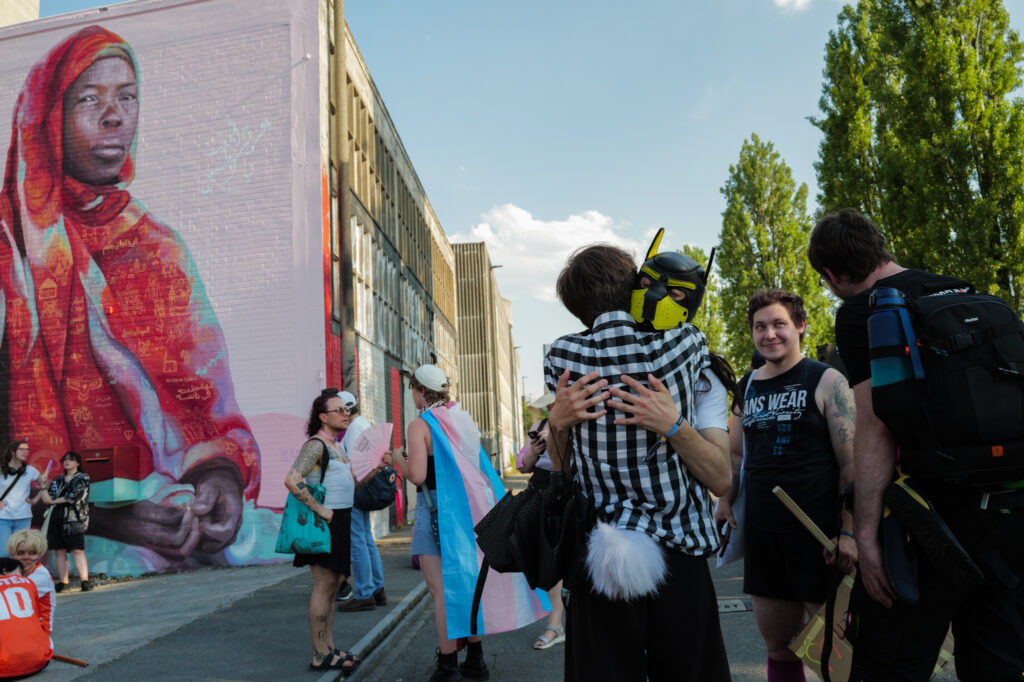
And there was the embrace. Two marchers who met and held each other, a spontaneous thing, nothing posed about it. I was lucky with the frame, I managed to get the mural behind them into the shot, so the moment sits against something larger than itself, layered the way the best of these scenes are. Two people, the wall behind them, the city around all of it.
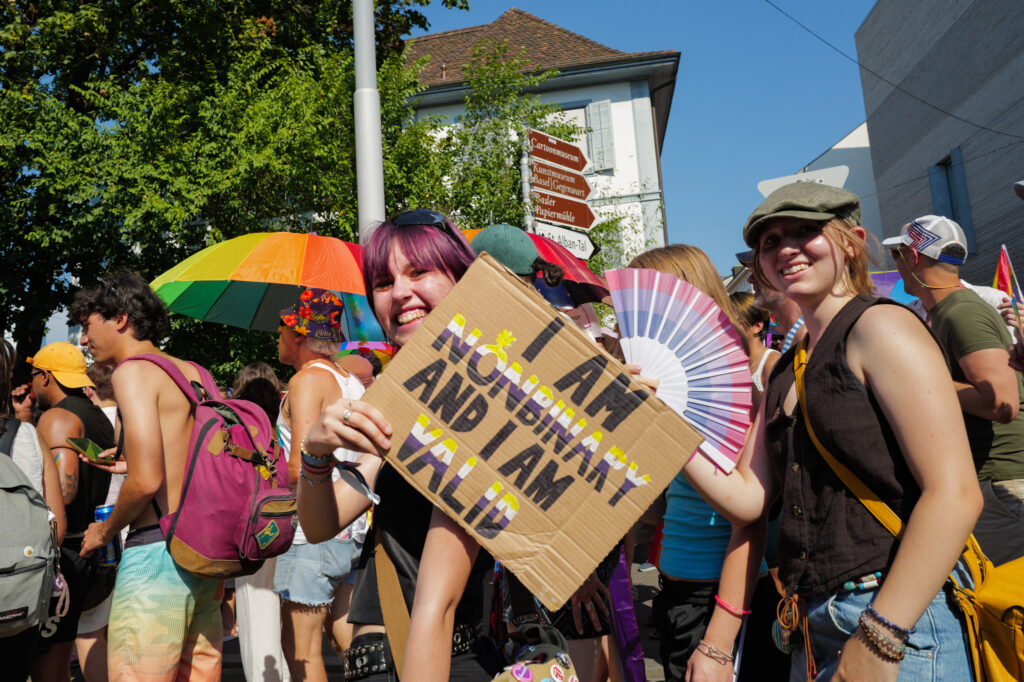
These were the pictures I kept. Not the flags, not the slogans, not the placards held up for the camera by people who knew exactly what they were doing. I took those too, the boy whose grin was so open you couldn’t not photograph it, the woman holding her sign and looking straight down my lens. They’re fine. They’re the postcard. But they’re not what I went looking for, and they’re not what stayed with me.
What stayed with me were two silver umbrellas, moving away up the river, in a heat that made the whole day feel like something you had to survive as much as celebrate. The parade was behind them. They were just walking home. I don’t know who they were. I never will.